


If you are wondering how to structure a digital marketing plan, this guide will help you create a clear and actionable framework that delivers measurable results. Creating a powerful digital marketing plan is the foundation of online success. Without a structured plan, businesses waste time, money, and effort on random strategies that do not deliver results.
In today’s competitive online world, whether you are a startup, entrepreneur, or growing brand, you need a clear, data-driven, and goal-oriented digital marketing strategy.
In this complete guide, you will learn how to structure a Digital Marketing Plan step-by-step for maximum growth, higher traffic, better leads, and increased conversions.
Connect With Us: WhatsApp
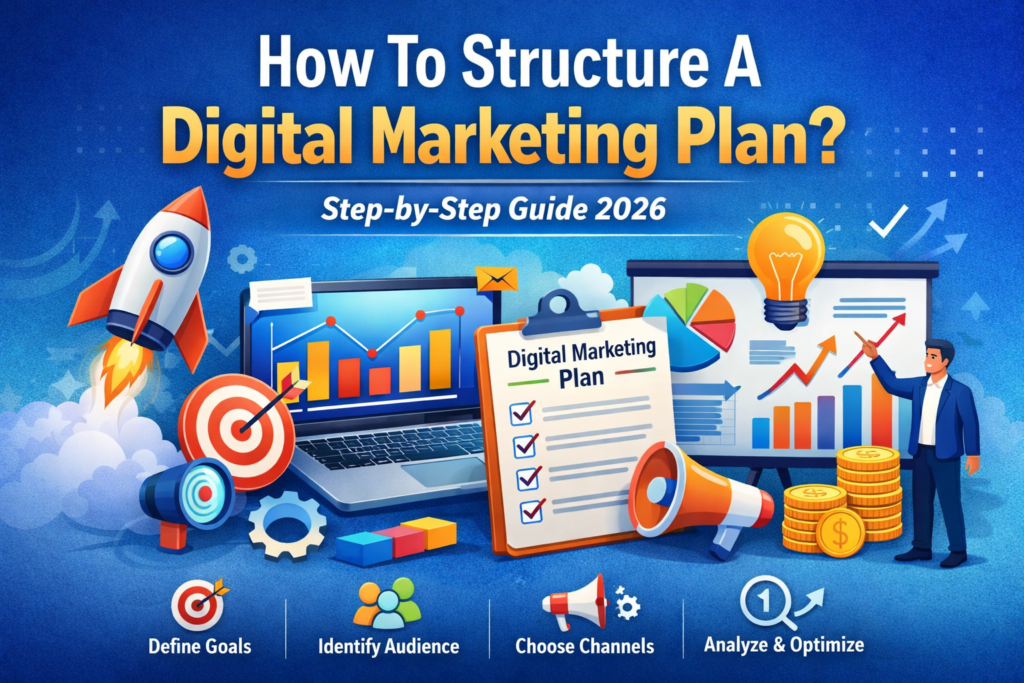
Why Is A Digital Marketing Plan Important?
Before jumping into the structure, understand why it matters.
A well-structured digital marketing plan helps you:
- Set clear business goals
- Identify your target audience
- Allocate budget wisely
- Choose the right marketing channels
- Measure performance effectively
- Improve ROI consistently
Without a plan, marketing becomes guesswork instead of strategy.
Step 1: Define Clear Marketing Goals
The first and most important step is setting SMART goals.
Your goals should be:
- Specific
- Measurable
- Achievable
- Relevant
- Time-bound
Examples:
- Increase website traffic by 40% in 6 months
- Generate 500 leads per month
- Improve conversion rate by 20%
Clear goals give direction to your entire Digital Marketing plan.
Step 2: Identify Your Target Audience
You cannot market to everyone. You must define your ideal customer.
Ask these questions:
- Who is your target customer?
- What is their age, location, and income level?
- What problems are they facing?
- What platforms do they use?
Create detailed buyer personas. The better you understand your audience, the more effective your marketing strategy will be.
Step 3: Conduct Market and Competitor Research
Research your competitors to understand:
- What keywords they are ranking for
- What type of content they publish
- Which platforms they use
- Their strengths and weaknesses
Use SEO tools to analyze search volume, keyword difficulty, and trending topics.
Competitor analysis helps you find gaps and opportunities in the market.
Step 4: Perform a SWOT Analysis
A SWOT analysis helps you evaluate:
- Strengths
- Weaknesses
- Opportunities
- Threats
This step ensures that your digital marketing plan is realistic and aligned with your business capabilities.
Step 5: Choose the Right Digital Marketing Channels
Not every channel works for every business. Choose platforms based on your audience and goals.
Common digital marketing channels include:
SEO (Search Engine Optimization)
Helps your website rank higher on Google and generate organic traffic.
Content Marketing
Blogs, videos, infographics, and guides to attract and educate your audience.
Social Media Marketing
Platforms like Instagram, Facebook, LinkedIn, and YouTube to build brand awareness.
Email Marketing
For nurturing leads and increasing repeat customers.
PPC Advertising
Paid ads on Google and social media for fast results.
Select the combination that aligns with your business objectives.
Step 6: Create a Content Strategy
Content is the backbone of digital marketing.
Plan:
- Blog topics
- Video content
- Social media posts
- Email campaigns
Focus on high-search keywords, user intent, and value-driven content.
Use a content calendar to maintain consistency.
Step 7: Set Your Budget
Your digital marketing budget should include:
- Advertising costs
- Content creation
- Tools and software
- Team or agency costs
Allocate funds according to channel performance and expected ROI.
Step 8: Define KPIs and Tracking Methods
Without tracking, you cannot measure success.
Important KPIs include:
- Website traffic
- Conversion rate
- Cost per lead
- Click-through rate (CTR)
- Return on ad spend (ROAS)
Use tools like Google Analytics and Search Console to monitor performance.
Step 9: Implement and Execute
Now it’s time to execute your plan.
- Publish content regularly
- Launch ad campaigns
- Optimize SEO pages
- Engage with your audience
Consistency is the key to digital marketing success.
Step 10: Monitor, Analyze, and Optimize
Digital marketing is not a one-time task. It requires continuous improvement.
Analyze:
- What is working
- What is not working
- Where you can improve
Optimize campaigns, update content, test new strategies, and scale successful campaigns.
Frequently Asked Questions (FAQs)
1. What is a digital marketing plan?
A digital marketing plan is a structured strategy that outlines your business goals, target audience, marketing channels, budget, and performance metrics to achieve online growth and higher conversions.
2. Why is structuring a digital marketing plan important?
Structuring a digital marketing plan ensures clarity, direction, measurable goals, better ROI, and efficient budget allocation. It prevents random marketing efforts and improves overall performance.
3. What are the key components of a digital marketing plan?
The key components include:
- Clear goals
- Target audience research
- Competitor analysis
- SWOT analysis
- Channel selection
- Content strategy
- Budget planning
- KPIs and performance tracking
4. How long should a digital marketing plan be?
A digital marketing plan can range from 5 to 20 pages depending on business size. It should clearly define objectives, strategy, and execution steps rather than focusing on length.
5. What tools are used to create a digital marketing plan?
Common tools include:
- Google Analytics
- Google Search Console
- SEMrush or Ahrefs
- Social media analytics tools
- Email marketing software
These tools help with research, tracking, and optimization.
6. How often should a digital marketing plan be updated?
A digital marketing plan should be reviewed monthly and updated quarterly based on performance data, market trends, and business goals.
7. What is the difference between a digital marketing strategy and a digital marketing plan?
A digital marketing strategy defines the overall approach and direction, while a digital marketing plan outlines detailed steps, timelines, budgets, and execution methods.
8. Can small businesses create a digital marketing plan?
Yes. Small businesses benefit greatly from structured planning because it helps them compete effectively with limited budgets and resources.
9. How do you measure the success of a digital marketing plan?
Success is measured using KPIs such as:
- Website traffic
- Lead generation
- Conversion rate
- Cost per acquisition
- Return on investment (ROI)
10. What is the first step in structuring a digital marketing plan?
The first step is defining clear, measurable marketing goals aligned with your overall business objectives.
Connect With Us: WhatsApp
Conclusion
How To Structure a Digital Marketing Plan
A well-structured digital marketing plan is the backbone of online business success. Without a clear strategy, businesses often struggle with low traffic, poor engagement, and weak conversions.
By setting SMART goals, identifying your target audience, performing competitor research, choosing the right marketing channels, creating a strong content strategy, and tracking KPIs, you create a powerful roadmap for growth.
Digital marketing is not about random posting or running ads blindly. It is about planning, execution, analysis, and continuous optimization.